4 min read · 24 October 2026
Which household records are worth keeping, and for how long
Learn which household records are worth keeping and how long to store them. This guide helps you manage receipts, warranties, and bills without the clutter.
Written with AI and reviewed against sources. General information only, not legal advice.What that means
- household
- records
- receipts
- warranties
- admin
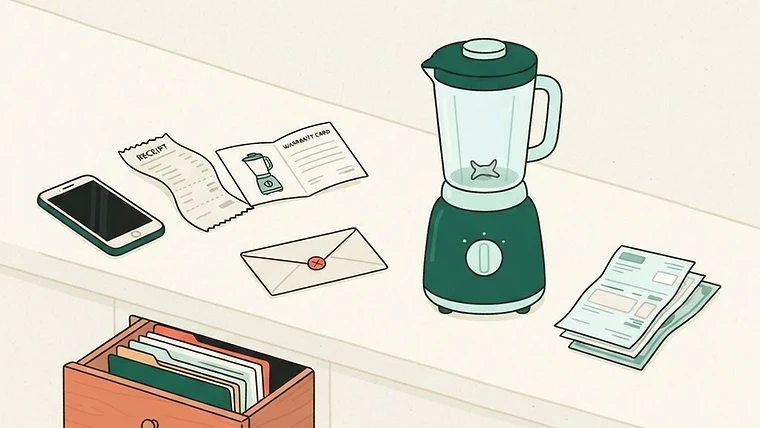
Managing household paperwork does not need to be a full-time job. Most of the paper that enters your home can be recycled immediately. The trick is knowing which household records are worth keeping, and for how long. By focusing on documents that support your consumer rights or tax obligations, you can keep your home admin simple and stress-free.
Understanding your consumer rights
Under the Consumer Guarantees Act 1993, goods you buy must be of acceptable quality, fit for purpose, and last a reasonable time given their price and type. This is a legal right that exists independently of any manufacturer's warranty. If a product fails, the retailer is responsible for putting things right. Keeping proof of purchase is essential to exercise these rights, as it confirms when and where you bought the item.
When you buy a significant item, save the receipt, any signed contracts, and the warranty document. You can use Hey Proofy to photograph or upload a receipt, which helps you keep a clear digital record. This ensures you have the shop, date, and total ready if you ever need to make a claim. Remember that a manufacturer's warranty is a separate promise from your rights under the Consumer Guarantees Act, so keep both if you have them.
Receipts for big purchases
For expensive items like appliances, electronics, or furniture, keep the receipt for as long as you own the product. These items are expected to last a reasonable time, and having the receipt makes it much easier to prove your purchase if a fault develops later. If you have a digital copy, you can safely discard the paper version, provided the copy is clear and readable.
It is helpful to track warranty dates so you know when your coverage ends. Hey Proofy can help you keep these dates in one list and send you a reminder before they expire. This prevents you from holding onto records for items you no longer own. Once you sell or dispose of an item, you can remove its associated records from your files.
Tax and financial documents
If you are an employee, most of your tax is handled through PAYE. However, if you have other income or need to keep records for tax purposes, Inland Revenue requires you to keep records for at least seven tax years. This applies to receipts, invoices, and bank statements that support your tax returns. Digital copies are acceptable as long as they are complete, accurate, and can be retrieved and read by Inland Revenue if requested.
For everyday expenses like groceries or fuel, you generally do not need to keep receipts once the transaction has cleared on your bank statement. If you use these for budgeting, you might keep them for a few weeks, but they rarely serve a long-term purpose. Focus your storage efforts on high-value items and tax-related documentation.
Vehicle and property records
Keep vehicle service records and registration documents for as long as you own the car. These records are valuable for maintenance tracking and can be a selling point when you eventually trade or sell the vehicle. Similarly, keep rates notices and records of major home improvements, as these can be relevant if you sell your property.
Insurance policies should be kept for the duration of the policy term. When you renew your insurance, you can usually discard the previous year's policy document. If you have a claim, keep all correspondence and receipts related to that specific event until the matter is fully resolved.
What to do next
- Set up a digital folder or use https://heyproofy.com/nz to capture your current receipts for big-ticket items.
- Review your existing paper files and recycle any receipts for items you no longer own or that are no longer under warranty.
- Check https://heyproofy.com/nz/your-rights to understand more about your consumer protections in New Zealand.
Quick answers
- How long should I keep receipts for big purchases?
- Keep receipts for significant items like appliances or electronics for as long as you own them. These records support your rights under the Consumer Guarantees Act 1993 if a product fails. If you have a clear digital copy, you can discard the original paper receipt.
- Do I need to keep everyday receipts?
- No. Once a transaction for everyday items like groceries or fuel has cleared on your bank statement, the receipt is usually no longer needed. You can discard these once you are satisfied the charge is correct. Only keep receipts that relate to warranties, insurance, or tax obligations.
- How long must I keep tax records in New Zealand?
- Inland Revenue generally requires you to keep records that support your tax returns for at least seven tax years. This includes receipts, invoices, and bank statements. You can store these electronically, provided the copies are complete, accurate, and can be easily retrieved if requested.
- Should I keep manufacturer warranties?
- Yes, keep manufacturer warranties for the duration of the coverage period. However, remember that your rights under the Consumer Guarantees Act 1993 may extend beyond the manufacturer's warranty period. Keep the warranty document alongside your proof of purchase to ensure you have all the information needed for a potential claim.
Sources
The official pages this guide was reviewed against. They are the authority, not us.