4 min read · 8 October 2026
Something you bought is faulty: what to say, and what to ask for
Learn how to handle a faulty product in New Zealand. This guide explains your rights under the Consumer Guarantees Act and how to talk to the retailer to get a fair outcome.
Written with AI and reviewed against sources. General information only, not legal advice.What that means
- consumer rights
- faulty goods
- cga
- refunds
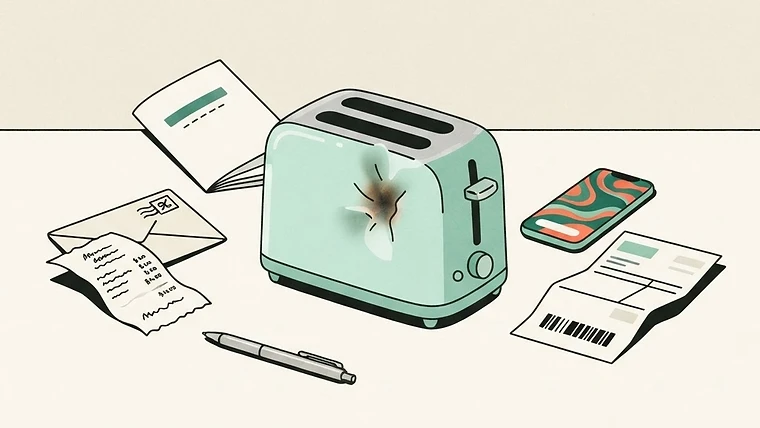
When you buy something that turns out to be faulty, it is natural to feel frustrated. In New Zealand, the Consumer Guarantees Act 1993 provides a clear framework for when things go wrong. You have rights when you buy products for personal or household use, and the retailer is the person you need to talk to first. They are responsible for putting things right, not the manufacturer.
Getting ready to talk to the retailer
Before you approach the shop, gather your details. You will need to explain when you bought the item, where you bought it, and what you paid. It helps to have a clear description of the fault and how it happened. If you have used Hey Proofy to store your receipt, you can quickly pull up the date and the total to show the retailer. Having this information ready makes the conversation much smoother.
It is helpful to keep a record of your conversation. If you speak in person, make a note of who you spoke to and what they said. If you communicate by email, keep a copy of the thread. This is useful if you need to follow up later. If you have a digital copy of your receipt, you can share it easily with your household or the retailer if needed.
What to say when you return a faulty item
When you speak to the retailer, be clear and calm. You might say that you bought the item on a certain date and that it has developed a fault. Explain that under the Consumer Guarantees Act, you expect the product to be of acceptable quality and fit for its purpose. Ask them how they intend to remedy the situation. You do not need to be a legal expert to state your expectations.
Remember that a manufacturer's warranty is a separate document. It does not replace your rights under the Consumer Guarantees Act. If the retailer suggests you contact the manufacturer, you can politely remind them that your contract is with the shop where you bought the item. The retailer is the one who must provide the remedy.
Understanding your options: repair, replace, or refund
When a product fails to meet the guarantees, you are entitled to a remedy. The retailer may offer to repair the item, replace it, or provide a refund. The specific remedy often depends on the nature of the fault. If the fault is minor, the retailer can choose to repair it. If the fault is substantial, or if they cannot fix it within a reasonable time, you may be entitled to a replacement or a refund.
There are some situations where these rights do not apply. For example, you cannot claim a remedy if you simply change your mind, if you have misused the product, or if you knew about the fault before you bought it. You also need to return the product within a reasonable time. If you are unsure about your specific situation, you can read more about your rights at https://heyproofy.com/nz/your-rights.
What to do next
-
Check your records for the receipt and the date of purchase. If you use Hey Proofy, search your receipt list to find the details quickly.
-
Visit the retailer with the faulty product and your proof of purchase to explain the issue and ask for a remedy.
-
Keep a written note of the outcome of your conversation, including the name of the person you spoke to and any agreed next steps.
Quick answers
- Can I get a refund for a faulty product?
- If a product is faulty, you are entitled to a remedy. If the fault is substantial or cannot be fixed in a reasonable time, you can ask for a refund or a replacement. The retailer is responsible for providing this remedy under the Consumer Guarantees Act.
- Do I have to deal with the manufacturer?
- No. Your contract is with the retailer who sold you the product. The Consumer Guarantees Act places the responsibility on the supplier to put things right. You do not need to contact the manufacturer unless you choose to do so, as the retailer is your primary point of contact.
- What if the retailer refuses to help?
- If a business refuses to provide a remedy or takes an unreasonable amount of time, you have options. You can have the fault remedied elsewhere and request that the business pays for the reasonable costs. Keep all records of your attempts to resolve the issue and any costs you incur.
Sources
The official pages this guide was reviewed against. They are the authority, not us.