4 min read · 12 October 2026
Lost the receipt? How to make a claim anyway
You do not need a paper receipt to make a claim under the Consumer Guarantees Act. Learn how to use other records to prove your purchase and get help.
- consumer rights
- cga
- receipts
- refunds
It is a common frustration to find a fault in a product only to realise the paper receipt has faded or gone missing. Many retailers may tell you that a receipt is mandatory for a return or repair, but this is not correct. Under the Consumer Guarantees Act 1993, you do not need the original paper receipt to make a claim. You only need to provide reasonable proof that you bought the item from that specific retailer.
What counts as proof of purchase
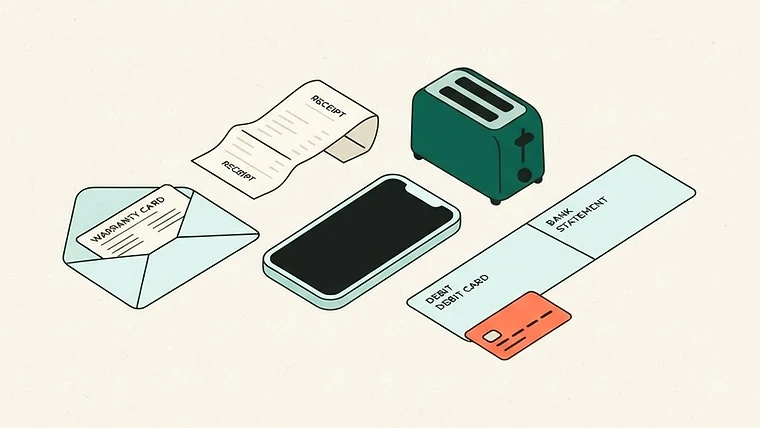
If you have lost your receipt, you can use other documents to show when and where you bought the item. A bank or credit card statement is often the most effective alternative. It shows the date, the retailer, and the amount paid. If you bought the item online, an email confirmation or a digital invoice is also valid proof. Some retailers can even look up your purchase history if you used a loyalty card at the time of sale.
Other forms of evidence can include a photograph of the receipt, or even a statement from someone who was with you when you made the purchase. The goal is simply to provide enough information for the retailer to verify the transaction in their own system. Hey Proofy can help you stay organised by keeping your receipts in one place, allowing you to search your own records easily if you ever need to find a specific purchase date or total.
Retailer obligations and common myths
Retailers sometimes insist on an original receipt as a condition of any return, but this is a common deflection. While a receipt is useful evidence, it is not a legal requirement for a claim under the Consumer Guarantees Act. If a retailer refuses to help because you lack a paper receipt, you can politely explain that you have other proof of the transaction. You are entitled to goods that are of acceptable quality and fit for purpose, regardless of whether you have the original paper slip.
It is also important to distinguish between a manufacturer's warranty and your rights under the Consumer Guarantees Act. A manufacturer's warranty is a separate promise that often has a fixed time limit. Your rights under the Act are different and depend on what is reasonable for the type of product and what you paid for it. The retailer is responsible for putting things right, not the manufacturer, unless the retailer has closed down.
Using your records to support a claim
When you approach a retailer, bring the faulty goods and your alternative proof of purchase. Be clear about the fault and the remedy you want. If the fault is minor, the retailer can choose to repair, replace, or refund. If the fault is substantial, you have the right to choose your preferred remedy. Keeping your bills and subscriptions in one list can make it much easier to track these details over time.
If you have trouble keeping track of your documents, Hey Proofy can help by reading the shop, date, total, and items from your receipts. It also tracks warranty dates and sends a reminder before they end, so you are never caught off guard. You can share this information with your household, ensuring everyone has access to the proof they need if a product fails.
What to do next
- Search your email inbox for order confirmations or check your banking app for the transaction details to use as your proof of purchase.
- Visit https://heyproofy.com/nz/your-rights to understand more about your rights under the Consumer Guarantees Act.
- Approach the retailer politely with your evidence and clearly state the fault and the remedy you are seeking.
Quick answers
- Do I need a receipt to make a claim?
- No. You do not need the original paper receipt to make a claim under the Consumer Guarantees Act. You only need to provide reasonable proof of purchase, such as a bank statement, email confirmation, or loyalty card record, to show that you bought the item from that specific retailer.
- What if the shop says I must have a receipt?
- Retailers sometimes incorrectly claim that a receipt is mandatory. If this happens, politely explain that you have other valid proof of purchase, such as a bank statement. The Consumer Guarantees Act does not require a paper receipt, and any reasonable evidence that verifies the transaction is sufficient for the retailer to look up the sale.
- Can I use a bank statement as proof?
- Yes. A bank or credit card statement is a common and accepted form of proof of purchase. It provides the necessary details, including the date of the transaction, the name of the retailer, and the total amount paid, which allows the shop to verify the purchase in their own records.
Sources
The official pages this guide was checked against.