3 min read · 7 October 2026
Manufacturer warranty or consumer law: which one covers you?
Understand how the Consumer Guarantees Act works alongside manufacturer warranties to protect your household purchases in New Zealand.
- consumer rights
- warranties
- cga
- household admin
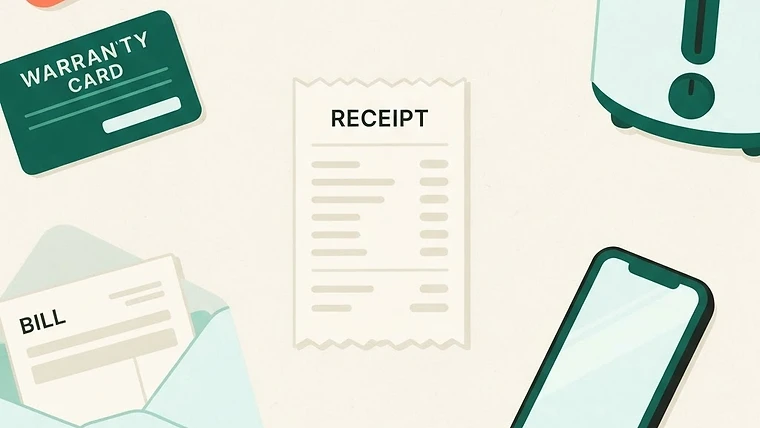
When you buy something for your home, you are protected by the Consumer Guarantees Act 1993. This law provides guarantees that apply to almost everything you buy for personal or household use. It is important to know that a manufacturer warranty is a separate, optional extra provided by the maker of a product. Your rights under the Consumer Guarantees Act exist regardless of whether you have a manufacturer warranty or an extended warranty. You can use Hey Proofy to keep your receipts and track warranty dates so you know exactly when your coverage ends.
Understanding your rights
The Consumer Guarantees Act requires that goods sold to you must be of acceptable quality, fit for their purpose, and last for a reasonable time given their price and type. There is no fixed number of months or years that a product must last. A high-end appliance is expected to last longer than a basic model. If a product fails to meet these standards, the retailer is responsible for putting things right. You should always approach the retailer first, as they are your primary point of contact for any issues. Manufacturer warranties are commercial promises that the maker will repair or replace a product for a set period. These are not mandatory, and they do not replace your legal rights. If a manufacturer warranty expires, your rights under the Consumer Guarantees Act still apply. You can use Hey Proofy to store your purchase details and share them with your household, ensuring everyone knows where to find the information if a fault occurs.
Minor versus serious faults
If a product has a fault, you must first determine if it is minor or serious. A minor fault is one that can be repaired within a reasonable time. In this case, the retailer has the choice to repair, replace, or refund the item. If the retailer refuses to fix the problem or takes too long, you may be able to have it repaired elsewhere and claim the costs from them. A serious fault is one that would have stopped you from buying the item if you had known about it, or it is unsafe, or it is significantly different from the description. If the fault is serious, you have the right to choose your remedy. You can ask for a refund, a replacement, or keep the item and claim compensation for the drop in value. You can find more information on your rights at https://heyproofy.com/nz/your-rights.
What to do next
-
Upload your receipts to Hey Proofy at https://heyproofy.com/nz/how-it-works so you have a clear record of your purchase date and price.
-
If a product fails, check the fault against the standards of acceptable quality and fitness for purpose before contacting the retailer.
-
Keep a record of all communication with the retailer regarding your claim, including dates and the names of people you spoke with.
Quick answers
- Does a manufacturer warranty replace my consumer rights?
- No. A manufacturer warranty is an extra commercial promise. Your rights under the Consumer Guarantees Act apply automatically to goods bought for household use. These legal rights continue even after a manufacturer warranty has expired. You do not need to rely solely on the manufacturer's terms to get a remedy for a faulty product.
- How long should my product last?
- There is no set time limit in law. How long a product should last depends on its type and what you paid for it. A more expensive, high-quality item is expected to last longer than a cheaper, basic version. The Consumer Guarantees Act requires goods to be of acceptable quality and last a reasonable time.
- Who do I contact if something breaks?
- The retailer who sold you the item is responsible for putting things right under the Consumer Guarantees Act. While you might contact a manufacturer for a warranty claim, your legal rights are against the retailer. Always keep your proof of purchase, as you will need it to show when and where you bought the item.
Sources
The official pages this guide was checked against.